Saturday, 19 November 2022

Qatar World Cup

The 8 groups who will play against each other.

Tomorrow kicks off another World Cup Soccer tournament from Qatar. Soccer is called football everywhere else around the world.  This is held every 4 years and is always held in the summer months, but since it is so hot in Qatar, they decided to schedule it in November-December. Of course, our dear Malta can never make it to the finals, but we still follow it passionately, especially when England and Italy are participating. Sadly, enough though, Italy will not be there this year as they missed qualifying by a goal. They did not make it even in 2018, and so they would be out of the final tournament for at least 12 years, if they make it in 2026. This is kind of rare for a big team that only last year won the Euro Championship, the best team in Europe, and now they’re not in the big final tournament of the World Cup. However, we will still enjoy all the games, 3 of them each day over the next month. 

Some of the stars who hope to shine in the Qatar World Cup.

Among the favorites are Brazil, England, France, Germany, Argentina, Belgium and Holland. But any team can surprise on any given day.   All the games will be played at 2PM, 5 PM and 8 PM, European time. New York time would be 8 AM, 11 AM and 2 PM. My Oregonian friends who would like to watch the games have an earlier start and the games will be at 5 AM, 8 AM and 11 AM.

Friday, 18 November 2022

Lots of Martinis !

This is another extract from my own autobiography which may bring a smile to your face, as I reminisce some peculiar incidents from my past years in the USA....

To celebrate the national feast of St Paul on February 10, I prepared another PowerPoint presentation on Malta to present during the Malta night. We wanted to serve some food, and I suggested to offer the Maltese typical snack known as ‘ħobż biż-żejt’ which the Altar Society volunteered to prepare. It was actually pretty easy as I asked each person to prepare a different vegetable, all diced up very small, and then we’ll mix them up just a few hours before the show. Then we’ll toast slices of bread and smear tomato paste with olive oil and spread a spoonful of the mixture on top. Most of the women volunteered to buy the ingredients themselves, but one elderly woman asked me to buy the green olives for her.  So later in the afternoon, I stopped at Albertson’s to buy the green olives. I picked up four large jars and headed for the counter. And this is how the conversation with the check-out girl at the counter went.

“Oh, my goodness Father, that’s a lot of martinis!”

“Well, they’re actually for my Malta night I’m organizing tomorrow. We have to dice up all kinds of vegetables to create a mixture....”

As the people behind me smiled, the girl smiled from ear to ear and said, “Yeah right!”

It was one of those funny moments that brought everyone to laughter, as they all knew I was not the type to drink martinis or vodkas until the olives are gone.

Thursday, 17 November 2022

St Elizabeth of Hungary

St. Elizabeth was born in Bratislava, a Kingdom of Hungary in 1207, the daughter of Alexander II, King of Hungary. At the age of four she was sent for education to the court of the Landgrave of Thuringia, and within a few years she was betrothed to his son, Ludwig. As she grew in age, her piety also increased by leaps and bounds. In 1221, aged 14, she married Ludwig of Thuringia, the same year that he was crowned Ludwig IV, and the marriage appears to have been happy. In 1223, Franciscan monks arrived, and the teenage Elizabeth not only learned about the ideals of Francis of Assisi but started to live these ideals. Ludwig was not upset by his wife's charitable efforts, believing that the distribution of his wealth to the poor would bring eternal reward; he is venerated in Thuringia as a saint, though not canonized by the church as his wife is. In spite of Elizabeth’s position at court she began to lead an austerely simple life, practiced penance, and devoted herself to works of charity. Her husband was himself much inclined to religion and highly esteemed her virtue, encouraging her in her exemplary life. They had three children, Hermann, Sophia and Gertrude. Then tragedy struck - Ludwig was killed while fighting with the Crusaders. After his death, Elizabeth left the court, made arrangements for the care of her children, and in 1228, renounced the world, becoming a tertiary of St. Francis. Her family wanted her to re-marry, but she made a vow of celibacy and never married. She built the Franciscan hospital at Marburg, Germany and devoted herself to the care of the sick until her death at the young age of 24 in 1231. St. Elizabeth is frequently pictured distributing bread to the needy in her community, and thus is the patron saint of bakers, countesses, the homeless, nursing services, widows, and young brides. She was canonized in 1235, just 4 years after her death.

Wednesday, 16 November 2022

St Margaret of Scotland

St Margaret of Scotland (1045-1093)

Margaret was an English princess, although, like the saint we honor tomorrow Elizabeth of Hungary, she was also born in Hungary in 1045. She later settled in England, and with her mother they sailed to Scotland to escape from the king who had conquered their land. King Malcolm of Scotland welcomed them and fell in love with the beautiful princess, and even though he was a good person, he and his court were a little rough. Margaret and Malcolm were married before too long. As Queen, Margaret changed her husband and the country for the better. When he saw how wise his beloved wife was, he listened to her good advice. She softened his temper and led him to practice great virtue. She made the court beautiful and civilized. Soon all the princes had better manners, and the ladies copied her purity and devotion. The king and queen gave wonderful example to everyone by the way they prayed together and fed crowds of poor people with their own hands. Their intention was to make everyone happy.  Margaret was a blessing for all the people of Scotland. Before she came, there was great ignorance and many bad habits among them. She worked hard to obtain good teachers, to correct the evil practices, and to have new churches built. She loved to make these churches beautiful for God's glory, and she embroidered the priest's vestments herself. God sent this holy Queen six sons and two daughters. She loved them dearly and raised them well. She attended to charitable works, and personally served orphans and the poor every day before she ate. She rose at midnight to attend church services every night. Her husband, Malcolm III, and their eldest son, Edward, were killed in a fight against the English at Alnwick Castle. Her other son Edmund was left with the task of telling his mother of their deaths. Margaret was ill, and she died on 16 November 1093, three days after the deaths of her husband and eldest son. Saint Margaret was canonized in the year 1250 by Pope Innocent IV in recognition of her personal holiness, fidelity to the Church, work for religious reform, and charity.

Tuesday, 15 November 2022

The Seminary Refectory

The main painting of St Paul in the Seminary Refectory

One of the main attractions at the Seminary in Floriana was the Refectory, where for 7 years, we met 4 times a day, for breakfast, lunch, tea and dinner. Originally built as a retreat house, the retreatant’s aim in coming here was that of elevating his whole being to the Lord. This is also clear in the paintings found in the refectory – a jewel amongst the decorated places found on the island. These paintings were commissioned at the time of the second director of this retreat house, Padre Domenico Calvi, in 1762, and were painted by an itinerant Sicilian painter about whom we do not know much else except his name, Pasquale Leonetti, according to the signature he left on the ceiling. 

St John the Baptist in the same painting by Leonetti

The whole room, quite large and with a high ceiling, has paintings of various scenes from the Bible where food is mentioned. Most impressive of them all is the main painting depicting St. Paul just before he left the island for Syracuse and Rome, after spending three months on the island in 60 AD. It shows various baskets of food on the ground, just before they were placed on the vessel, which was given to St. Paul, after the one he used to reach Malta was shattered to pieces.

The ceiling of the Refectory

A corner of the same Refectory covered with paintings

Monday, 14 November 2022

Seminary Chapels

The painting of St Ignatius by Antoine Favray 

My years at the Major Seminary were a milestone for me personally as I truly enjoyed community living. I would have probably done well even if I joined a religious order and lived in a community of monks or friars, as I shared with you last week when I lived with the Trappist monks at Spencer, Massachusetts, USA. But my years at the Seminary were between 1970 and 1977, and I was lucky to have spent those years at the Floriana Major Seminary, because by 1978, the Seminary had moved to its new place at Tal-Virtu, in Rabat. 

A side view of the main chapel

The main chapel at the former Seminary, which is now the Diocesan Chancery, was probably my favorite place as I spent hours praying, besides celebrating and attending daily Mass with my classmates. The inside of the chapel has a rococo-style architecture. The titular painting on the main altar depicts St Ignatius writing his spiritual exercises under the direction of the Blessed Mother and the Child Jesus. It is the work of the French painter, Antoine Favray (1706-1798) who also did the other 4 paintings in the side altars. 

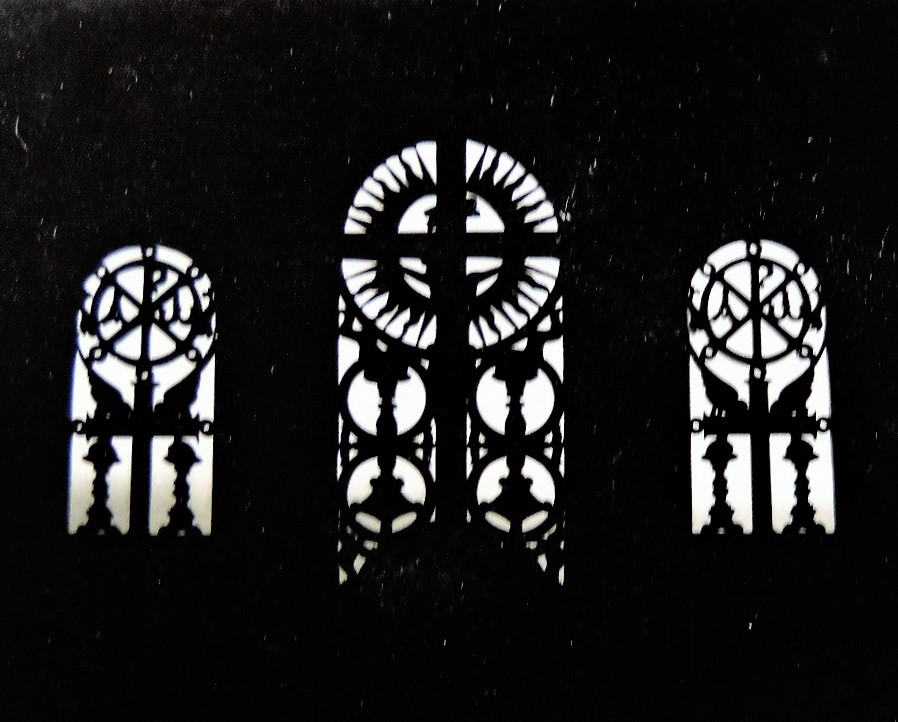
The smaller chapel's silhouette background

On the first floor, there is another chapel, which was used for private prayer, and I remember well the silhouette above the altar, which you can see here in this black-and white photo I took in the 1970s with my Instamatic camera. While we attended classes at the University of Malta, which was brand new then, we lived and did all other activities at the Seminary. Tomorrow, I’ll take you inside the Refectory, an entire painting from floor to ceiling.

Sunday, 13 November 2022

Intellectual

Albert Schweitzer near the hospital he built

Albert Schweitzer was one day building a section of his hospital in Africa. At one moment he was trying to place a large plank of wood in place, but it was too heavy for him. He noticed an African gentleman, dressed nicely and asked him if he could help him carry the plank. The man replied ‘I am sorry, but I do not do that kind of work. I am an intellectual.’ And Albert Schweitzer, with 5 degrees after his name, replied: ‘I too was an intellectual, but I couldn’t live that kind of life, when I saw so much need, sickness and poverty around me.’

Saturday, 12 November 2022

St Josaphat

St Josaphat (1584-1623)

Saint Josaphat Kuntsevych was born in Vladimir, Ukraine in the year 1584 of Christian parents of the Slavic rite. He was very devout even as a young boy, praying the Breviary which the priests recite daily. He joined the Basilians in the town of Vilna, being ordained priest after he finished his studies. He attracted many people, especially those who had drifted away from the church. He built convents and monasteries and made other reforms in his order. He became bishop of Polotsk in 1617 when he was only 38, and continued with his reforms, helping the poor and selling some of his property from his Cathedral to help the poor people and those in need. Some people were jealous of his work and in particular, a certain Smotritski made himself an Archbishop, even encouraging people to follow him instead, and oppose the reforms brought about by St Josaphat, a move that caused many conflicts. When the saintly bishop went to calm things down and restore order, they attacked him, killed him and threw his body in the river in Vitebsk. It was November 12, 1623, and he was only 44, and when they brought his body from the river 5 days later, there was a fragrance of lilies and roses around his body. They placed his body in a sarcophagus and many people repented of their opposition to him, including Smotritski who had previously proclaimed himself Archbishop. But he too turned his life around, leading a life of penitence for the rest of his life. Many miracles were attributed to St. Josaphat, and when he was exhumed 5 years after his death, his body was perfectly preserved – only his clothes had decayed. His body was left for veneration, and many people traveled many miles to honor him. He was canonized in 1867 by Pope Pius IX, and his body was transferred to the Vatican Basilica in November 1963, where he rests in one of the side altars. Incidentally, I remember as an altar boy serving Masses at the Vatican, serving a few Masses with a Slavic priest at his altar, where the Mass lasted an hour and a half, with the priest using a whole loaf of bread and a large pitcher of wine during the Mass, their custom in celebrating the liturgy. 

Friday, 11 November 2022

Saint Martin

St Martin sharing his cloak by Van Dyck

Born in 316 AD in Pannonia, a region that belonged to Hungary, Martin wanted to live as a monk, but was made a Bishop. He was born just after the persecutions had ended in 313 AD, and so did not see much torture. However, it was not easy to live as a Christian. All we know about St Martin came to us through Sulpicius Severus, who once knocked on Martin’s door as a beggar. Martin welcomed him, washed his hands and his feet and treated him with kindness. Sulpicius became Martin's disciple, as well as his biographer. He served in the Roman cavalry in Gaul, but left military service at some point prior to 361, when he became a monk and a disciple of St Hilary of Poitiers. He was consecrated as Bishop of Tours in 371. He was kind to everyone and the famous story about him helping another beggar by giving him half of his cape is well documented. He died in 397 AD.

We remember also today all the victims of wars as Veterans Day is celebrated world-wide, known also as D-Day or Armistice Day, or even Remembrance Day to mark the anniversary of the end of World War I. Major hostilities of World War I were formally ended at the 11th hour of the 11th day of the 11th month of 1918 when the Armistice with Germany went into effect. At the urging of major US veteran organizations, Armistice Day was renamed Veterans Day in 1954.

Thursday, 10 November 2022

St. Joseph’s Abbey

The present Trappist community at Spencer

One of the reasons the Abbey is well known world-wide is because of the religious vestments they produce, a company known as the Holy Rood Guild. They use the best quality material, and the final result shows what fine vestures they create. They also create incense, which is used in many Cathedrals and churches, as well as the Chrism which is used on Holy Thursday at the blessing of the oils. When the monks enter the monastery, they take 4 vows, poverty, chastity and obedience as well as a fourth vow, that of stability, whereby they stay in the same monastery till death. 

Maple trees line up the road leading to the Abbey

Monks are buried in the ground in the cemetery on the property without a casket. The graveside is marked by a simple cross, with the name of the monk and date of death. The number of monks has dwindled from the time I was with them 20 years ago. Some have died, others were in the Infirmary - that is why the above photo shows only 36. The grounds of the Abbey is so colorful in October and November, as the maple trees turn the area into an autumnal heaven, which by early December turns into all white, snowy, icy and cold. 

Wednesday, 9 November 2022

More from Spencer

Trappist monks at the Abbey chapel

At St. Joseph’s Abbey, the monks were all vegetarians. On special occasions and holidays, they would eat fish. Moreover, they only had dessert on Sundays. However, when I was at the Refectory on the first day, I saw quite a bit of fruit displayed. Waiting a day to inquire about it, I was told ‘Father Julian, fruit is not dessert – eat all you can!’ To which I replied ‘Glory, Glory, Alleluia.’ Since I am not keen on cakes and sweets, I only have fruit as a dessert, and so I was really in seventh heaven. 

That's me and another monk, packing the jars of Trappist Preserves

The monks of course had to support themselves, and they manufactured jams and jellies and preserves in a small factory, in which I also helped, mainly by packing the jars in boxes and stacking them up. Many men attend retreats at the Abbey, staying in the Retreat House for a week, and if they are priests they concelebrate with the monks. While I was with them, I was invited to be the main celebrant on two occasions, a privilege they won’t give even to bishops visiting them. 

Tuesday, 8 November 2022

20 years ago

Between 2002 and 2003, I did a sabbatical with the monks of St. Joseph's Abbey in Spencer, Massachusetts. During those 6 months, I lived the life of a monk, mingling with the 70 priests and brothers who made up the entire population of the Abbey.  I ate with them, prayed with them, dusted the cloisters, pruned trees, raked zillions of leaves, cleaned like them, including the 'jakes,' and experienced what it was like living as a Benedictine monk. I will share over the next few weeks some photos from my experience there. Today you can see the Abbey from outside, built by the monks themselves between 1951 and 1952 from the fieldstones they found on the property. 

The beautiful and peaceful Abbey chapel.

They had no other choice as their previous abbey had burned down in Rhode Island, and every monk had to pitch in and use their strength, talents and expertise in various occupations to build this massive monastery. The Trappist monks follow the rule of St Benedict, do not talk, unless necessary, and spend 7 time periods in their chapel, praying as early as 3:30 AM, ending with the Compline and the singing of the Salve Regina at 8 PM.

Monday, 7 November 2022

Better writing

Some of you may remember the Reader’s Digest past editions where they give you 20 words, and you have to guess what they mean by giving you 3 options. I used to enjoy that feature and was pretty good at it. Now here is a way to embellish your writing by using various words that colorize your writing. These are some words to use and impress those who read your letters or articles.
Ubiquitous - an adjective that means ever-present, everywhere, omnipresent.
Dichotomy - a noun which refers to something with two contradictory qualities, or a division into two mutually exclusive or contradictory identities.
Equivocate - a verb which means to beat around the bush, or deliberately use vague or ambiguous language.
Non sequitur - a statement that is unrelated to previous conversation. It can also be a conclusion drawn from ideas that seemingly are unrelated or don’t make sense. Originally in Latin.
Panacea - a noun which refers to a magic cure-all or universal remedy.
Perfunctory - an adjective which means to do something mechanically or superficially, or with little to no enthusiasm.
Fastidious -  an adjective, and is a fancy way of saying someone pays great attention to detail—or is critical and hard to please.
Scintillating - a noun which means to be very clever, lively, or animated.
Cacophony - a noun which refers to a harsh or jarring noise, or a discordant mix of sounds.
Acquiesce - a verb, and is just another way of saying that someone accepts something reluctantly, but without putting up a fight.
Anomaly - a noun that refers to an abnormality or deviation from what is expected. It can also mean something odd, strange, or inconsistent.
Capitulate - a verb, and a fancy way of saying give up.
Facetious - an adjective that describes joking, often in an inappropriate manner.
Aplomb - a noun that refers to a sense of self-confidence.
Axiomatic - an adjective, and a fancy way of saying that something is self-evident.

Sunday, 6 November 2022

Jesus buried in Oregon!

Occasionally I share with you some of the anecdotes I experienced in my years in the USA. These are a collection of stories which I wrote as an autobiography, still unpublished but quite interesting and funny at times.

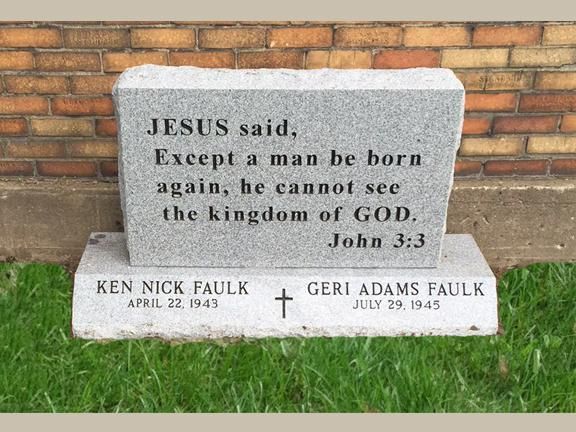
A funny situation happened one day when I had to lead a burial service in a small cemetery at North Powder, Oregon. It was a small gathering which included some children of the immediate relatives of the deceased. The children could not stand still and decided to go around the cemetery for a treasure hunt of their own imagination. At one moment they came running towards us, and during my devotional prayers, they started shouting “We found it, we found it! We found where Jesus is buried...” Their parents calmed them down, and when my prayers were finished, we asked them what they found. At which point I followed them inquisitively to a nearby grave to find a tombstone with a quote from the Bible that featured the name Jesus on it! Since they attend catechism, they knew how to read the name of Jesus, and they felt they made the discovery of the century! Or should I say millennium! So now we know that Jesus is buried in North Powder cemetery - at least three young children believe that!

Saturday, 5 November 2022

Patron saints for the kitchen

Here is a list of saints we should all remember while cooking in our kitchens. At the end, you can find the day of their respective feast-day, not all of them found in the liturgical calendar.

1. St. Nicholas of Syracuse/Santa Claus — Patron of baking, confectionaries, chocolatiers - Dec. 6
2. St. Francis Caracciolo — Patron of Italian chefs, Italophiles and Italian food - June 4
3. St. Hyacinth — Patron of pierogi - Aug. 17
4. St. Anthony the Abbott — Patron of butchers, farm animals, meat-eaters, bacon, salumeria - Jan. 17
5. St. Drogo — Patron of coffee, coffee-drinkers, cafes, baristas - April 16
6. Dom Justo Takayama Ukon — Patron of tea - Feb. 3
7. St. Elizabeth of Hungary — Patron of bakers, baking - Nov. 17
8. St. Arnulf of Metz/Arnouf — Patron of beer, bartenders - July 18
9. St. Urban of Langres — Patron of wine, vintners, sommeliers - Jan. 23
10. St. Neot — Patron of fish fries - July 31
11. St. Lawrence of Rome — Patron of Chefs, sommeliers, cooking, comedians - Aug. 10
12. St. Michael the Archangel — Patron of Grocers - Sept. 29
13. St. Isidore the Farmer — Patron of Farmers, greengrocers - May 15
14. St. Brigid of Kildare — Patron of cheese and cheesemakers - Feb. 1
15. St. Abigail — Patron of bees and honey - Feb. 11
16. St. Hubert — Patron saint of hunters, venison, wild game - Nov. 3
17. St. Martha of Bethany — Patron saint of cooks, waiters, waitresses - July 29
18. St. Honoré — Patron saint of bread, bakers and those who make altar bread - May 16
19. St. Nicholas of Tolentino — Patron saint of vegans and vegetarians - Sept. 10
20. St. Hildegard of Bingen — Patron saint of nutritionists, recipe collectors, chefs - Sept. 17

Friday, 4 November 2022

St Charles Borromeo

St Charles Borromeo distributing food to the poor.

St. Charles was the son of Count Gilbert Borromeo and Margaret Medici, sister of Pope Pius IV. He was born at the family castle of Arona on Lake Maggiore, Italy on October 2, 1538. He received the clerical tonsure when he was twelve and was sent to a Benedictine abbey at Arona for his education. In 1559 his uncle was elected Pope Pius IV and the following year, named him his Secretary of State and created him a cardinal and administrator of the see of Milan. He served as Pius' legate on numerous diplomatic missions and in 1562, was instrumental in having Pius reconvene the Council of Trent, which had been suspended in 1552. Charles played a leading role in guiding and in fashioning the decrees of the third and last group of sessions. He was ordained a priest in 1563 and was consecrated bishop of Milan the same year. Before being allowed to take possession of his see, he oversaw the catechism, missal, and breviary called for by the Council of Trent. When he finally did arrive at Trent (which had been without a resident bishop for eighty years) in 1556, he put into effect, measures to improve the morals and manners of the clergy and laity, raised the effectiveness of the diocese, established seminaries for the education of the clergy, founded a Confraternity of Christian Doctrine for the religious instruction of children and encouraged the Jesuits to be more visible and active. He increased the systems to the poor and the needy, was most generous in his help to the English college at Douai, and during his bishopric held eleven diocesan synods and six provincial councils. He was active in preaching, resisting the inroads of Protestantism, and bringing back lapsed Catholics to the Church. He encountered opposition from many sources in his efforts to reform people and institutions. He died at Milan on the night of November 3-4, 1584, and was canonized in 1610. He was one of the towering figures of the Catholic Reformation, a patron of learning and the arts, and though he achieved a position of great power, he used it with humility, personal sanctity, and unselfishness to reform the Church, of the evils and abuses so prevalent among the clergy and the nobles of the times.

Thursday, 3 November 2022

Julia Roberts and MLK

Julia Roberts and Coretta and Martin Luther King Jr
In a recent interview, the actress Julia Roberts revealed how Martin Luther King's Jr helped support Julia Roberts and especially her mother when she was giving birth to the future actress. The 55-year-old actress revealed that her mother and father had a close relationship with the Kings.  Julia's parents, Betty Lou Bredemus and Walter Grady Roberts, started their own children's acting school in Georgia; and MLK Jr. asked if his children could attend. Black kids were still not allowed in many schools, so when Julia's parents welcomed the Kings' children with open arms, the couple was touched. That's why, when Betty and Walter gave birth to Julia in 1967 and struggled to pay the medical bills, she said the political figure and his wife stepped in to help.  It was previously reported that Julia's dad, Walter, was the personal acting coach to Martin and Coretta's daughter, Yolanda, who went on to become a big actress. Yolanda faced difficulties at the school due to her skin color, and someone even 'blew up' a car outside of the theater while she was performing in a play in 1965. Yes, kind and generous people exist in this world of ours! It’s just that we don’t often hear about them. It’s the purpose of this blog to let you know about them – but please share these great stories with others.

Wednesday, 2 November 2022

We remember them.....

This is a prayer you can say, ending with...’we remember them....’ I wrote this for a celebration of November 2, and you can add any other personal things for which you remember your loved ones.

For their involvement in our churches, their dedication and devotion, ......we remember them.

For their generosity with their time, talent and treasure.......

For their interest in many community events, social gatherings and the joy of life......

For their love of their spouses, children, siblings, relatives and friends.......

For cherishing the discipline and love of their parents, and always obeying them.....

For their interest in history, current events and participation in them whenever possible......

For their commitment to their faith, and passing it on to their children......

For always being there when we needed them for support, encouragement and appreciation.....

For being friendly to everyone, and a true faithful reliable friend, especially when everyone else have left you.....

For their love of music, art, culture, cooking, adventuring and for clean fun.......

For being there to hold a hand, to give a hug, to smile and make your life better.......

For their sincerity, kindness, altruism and generosity........

For always accepting us, faults, warts and all......

Tuesday, 1 November 2022

All Saints

Parade of Saints at St Francis parish in Bend, OR.

Each year on the feast of All Sanits I used to present a collection of saints, represented by children from our Catholic School and our Faith Formation program. These photos show some of the children as they were presented with a brief biography. Each child was dressed up as the respective saint, even carrying an item related to their lives. This was a teaching lesson for the children as well as their parents and siblings, since I read a brief biography for each saint. 
My idea was to counteract the Halloween costumes that are so popular at this time and sway the children away from the grotesque and bizarre towards the holy and sublime. The parents worked hard to research and find out how that particular saint dressed like, which shows how some of the costumes and outfits were very original.
Another year of Saints presented to the parishioners.

Monday, 31 October 2022

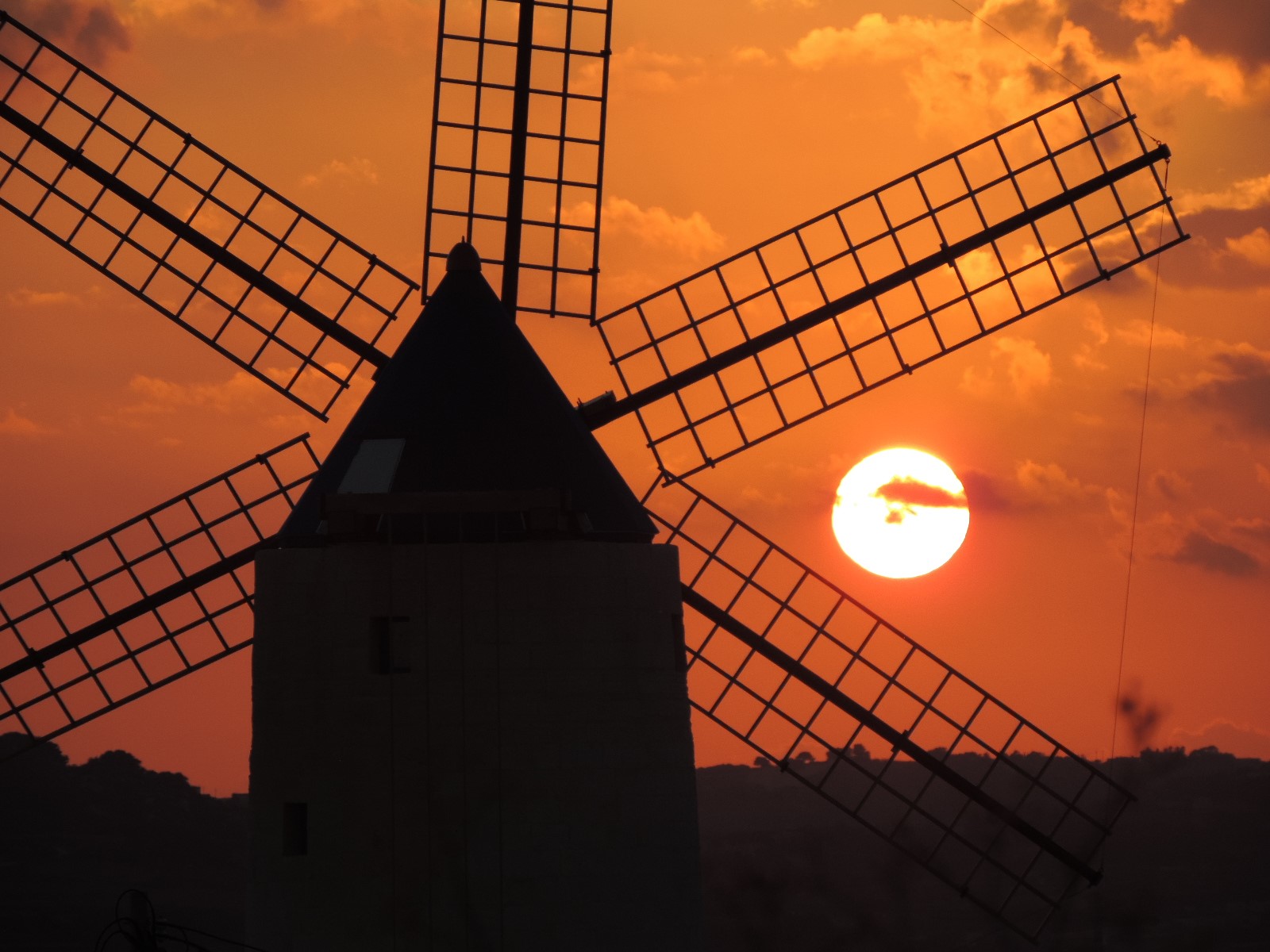
A windmill sunset

Just this week they installed a beautiful windmill close to our Retirement Home at Hilltop Gardens in Naxxar. And of course, I was waiting for a spectacular sunset to get some photos with the windmill in the foreground. So, enjoy these four photos as I look forward to more similar photos with a landmark that is by far much more attractive than the tower cranes, electricity poles and wires hanging all over the place. 

Sunday, 30 October 2022

Enlightening our churches

A very wealthy person built a new church high in the mountains. It was a very beautiful church, and all the neighbors went to see it when it opened officially. However, an older parishioner noticed that there were no lights, and when it got dark in the evening, the church was pitch dark. The wealthy man spoke in place of the pastor and told them: ‘We are giving a light bulb to each family, and when you come to church, bring it along and place it in one of the hundreds of sockets we left visible and accessible at eye level. If you don’t attend, your place will be left in the dark, and the more people attend, the more lit up the church would be. The parishioners got the message loud and clear, and were always present for Mass, even daily Mass. We can ask ourselves: how much are we enlightening our churches by our presence.

Saturday, 29 October 2022

Flores, bursting with vocations

A church in the diocese of Flores

While 85% of Indonesians are Muslims, the island of Flores, which is part of this archipelago, with a population of 1.9 million, is happy to report that 70% of the inhabitants are Catholic. The Seminary in this island is bursting to the seams with seminarians. The Verbite Missionaries, who run the local Seminary takes care of no less than 1200 seminarians. The 5 dioceses that are in Flores have 847 priests, and 646 local seminarians studying. The local Bishop said he is sending hundreds of missionary priests, because the family soil is very fertile, and parents are very proud of their sons who are called to the priesthood. Most of the inhabitants are poor farmers, but they emphasize good education for their children, and even here the local church helps out too. And everyone is very appreciative of their priests, whom they admire and hold in high regard.